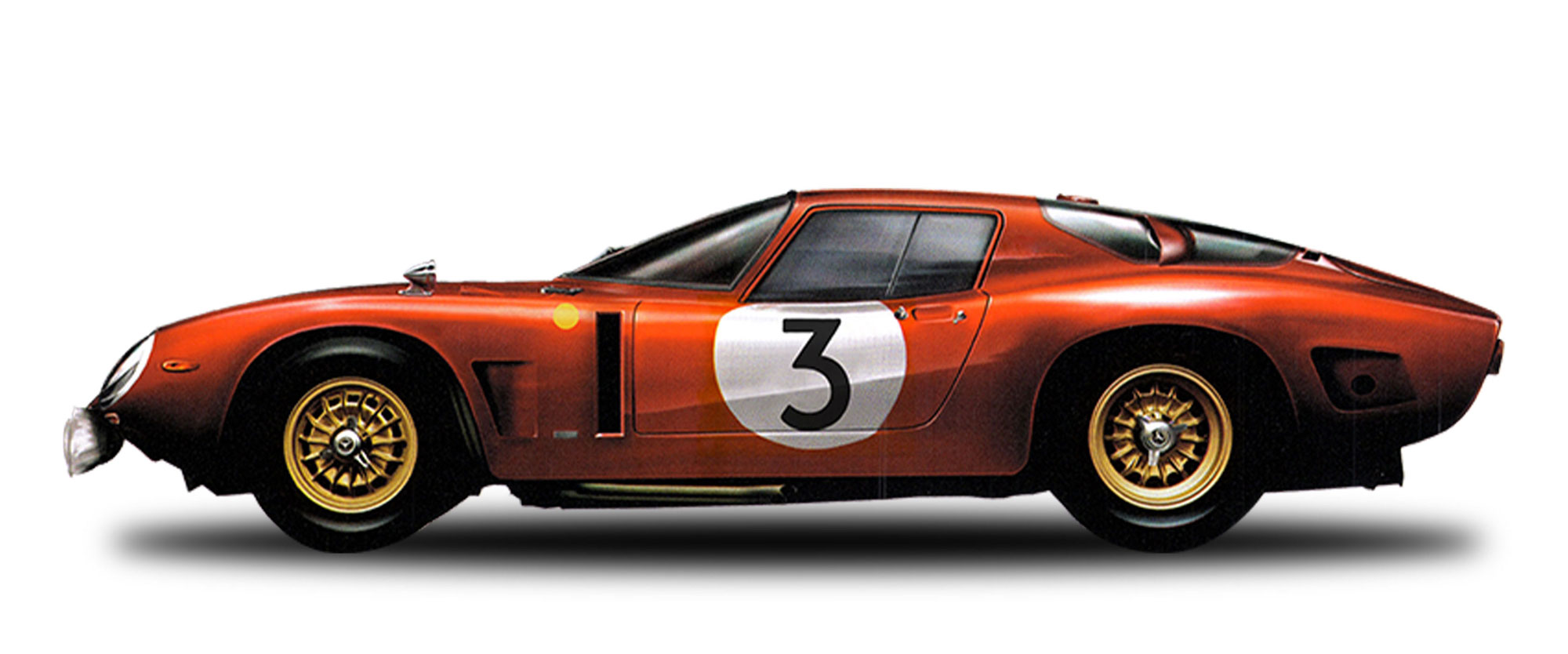
"I always need to know why something fails, so i can invent a solution"
Giotto
1964
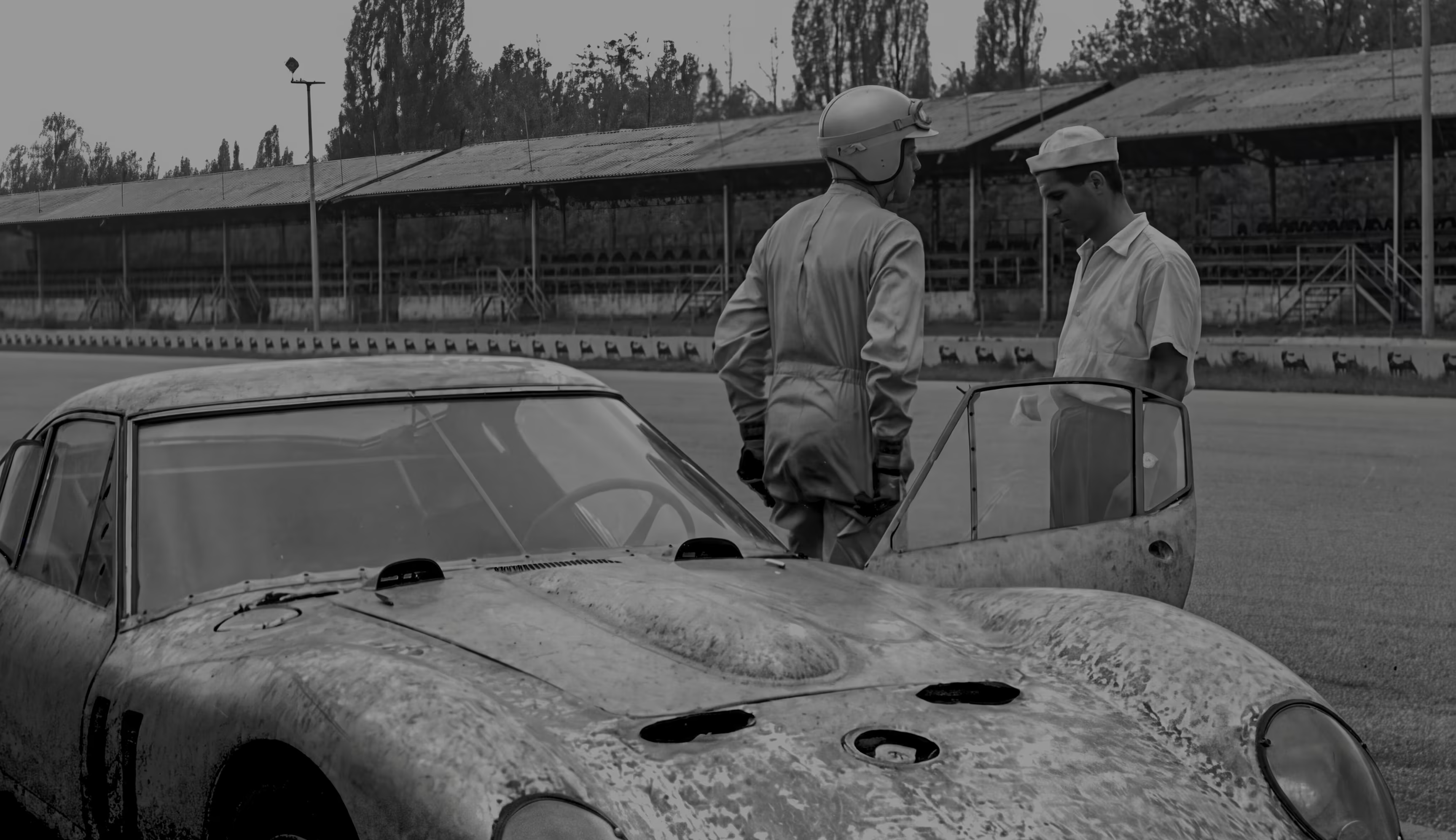
5300GT Strada
Bizzarrini was founded in 1964 in Livorno, Italy, originally as Prototipi Bizzarrini S.R.L to manufacture luxury sports cars bearing the Bizzarrini name and brand marque. In that fledgling year genius automotive engineer Giotto Bizzarrini produced the new firm’s first car, the 5300GT which was an evolution of the Bizzarrini developed Iso A3/L.
Records indicate some 133 examples of the 5300 GT were produced across the Strada, America and iconic Corsa editions. Giotto firmly believed that innovation, development and reliability should be tested and proven in the more demanding arena of the track. In 1965 the Corsa edition of the 5300GT was engineered by Bizzarrini himself in the single minded pursuit of racing success.
1965
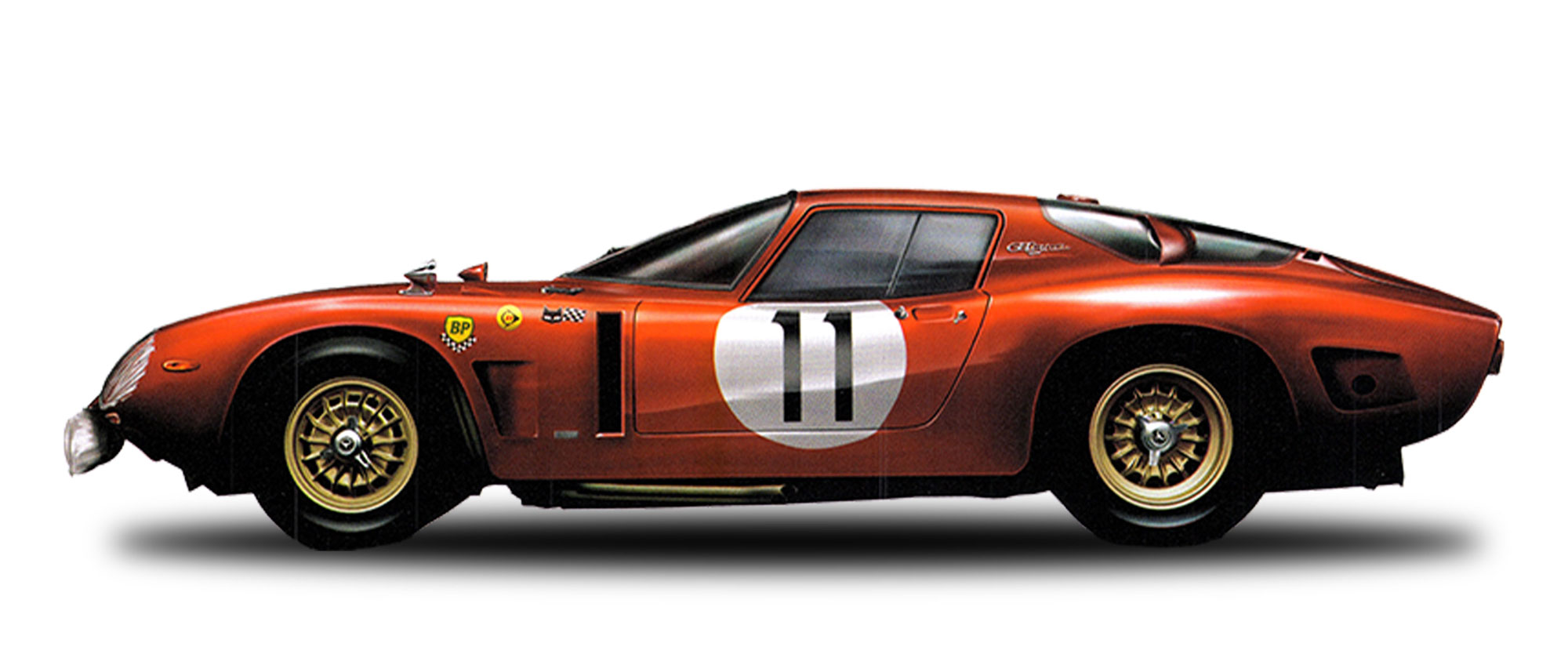
5300GT CORSA
Giotto firmly believed that innovation, development and reliability should be tested and proven in the more demanding arena of the track.In 1965 the Corsa edition of the 5300GT was engineered by Bizzarrini himself in the single minded pursuit of racing success.
In the summer of 1965 at the Circuit de la Sarthe, the 5300 GT Corsa won its class at the 24hrs of Le Mans, covering more than 300 laps at an average speed of 170km/h. Reportedly the Corsa recorded the fastest speed on the Mulsanne Straight that year. Immediately after the race Giotto drove the car home to Livorno.
1966
P538
Giotto firmly believed that innovation, development and reliability should be tested and proven in the more demanding arena of the track. In 1965 the Corsa edition of the 5300GT was engineered by Bizzarrini himself in the single minded pursuit of racing success.
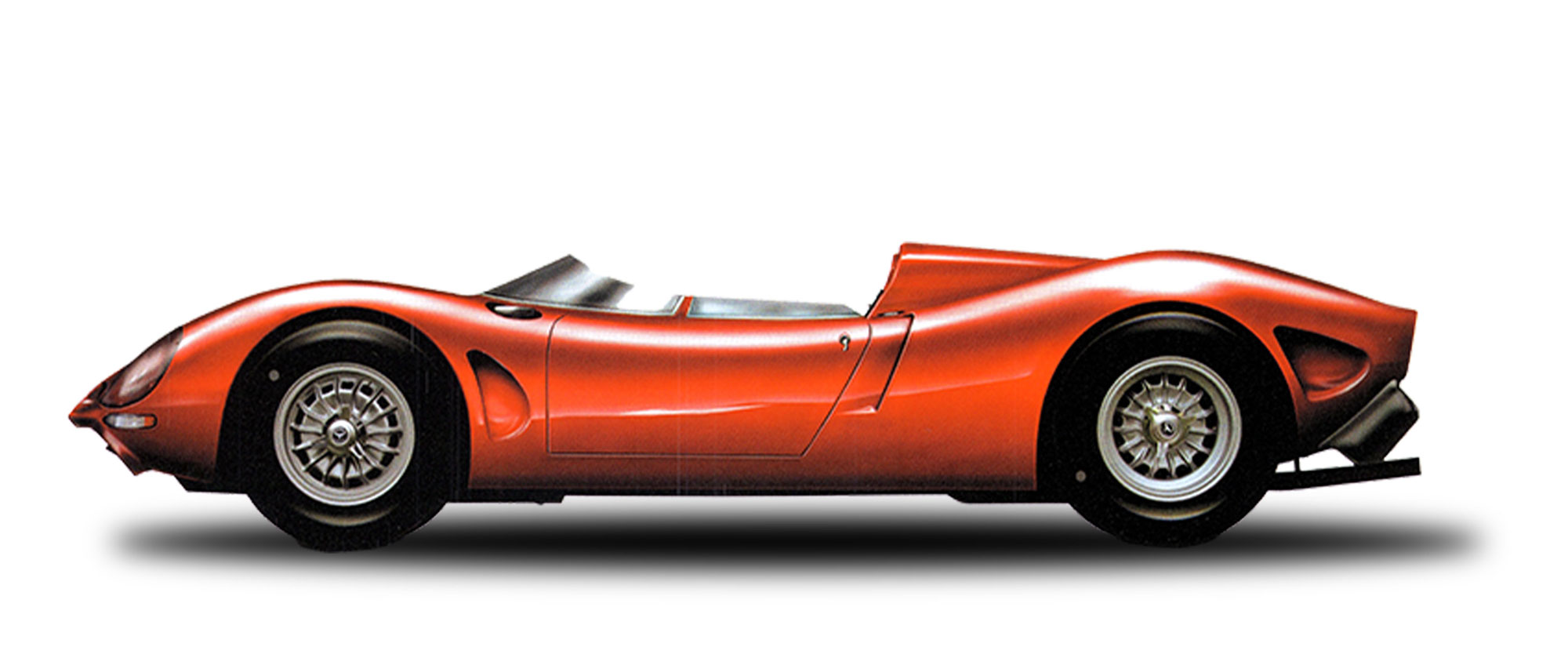
Invigorated by that success Bizzarrini created a more extreme, but achingly beautiful, open speedster in 1966.The curvaceous body was again designed by Giugiaro, with the name derived from its Posteriore (rear) engine, capacity (5.3L) and 8 cylinders, the P538 was entered in to the 24hrs of Le Mans 1966.
1966
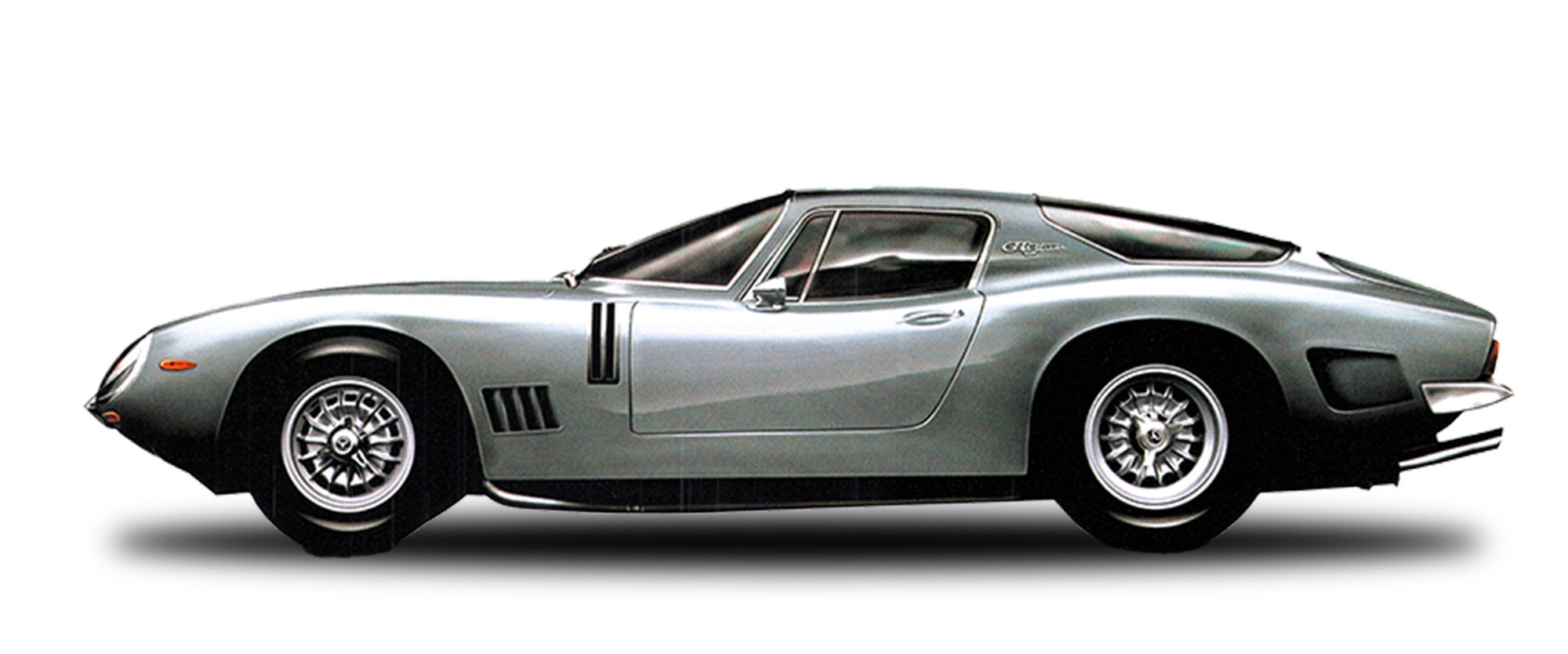
5300GT Spyder
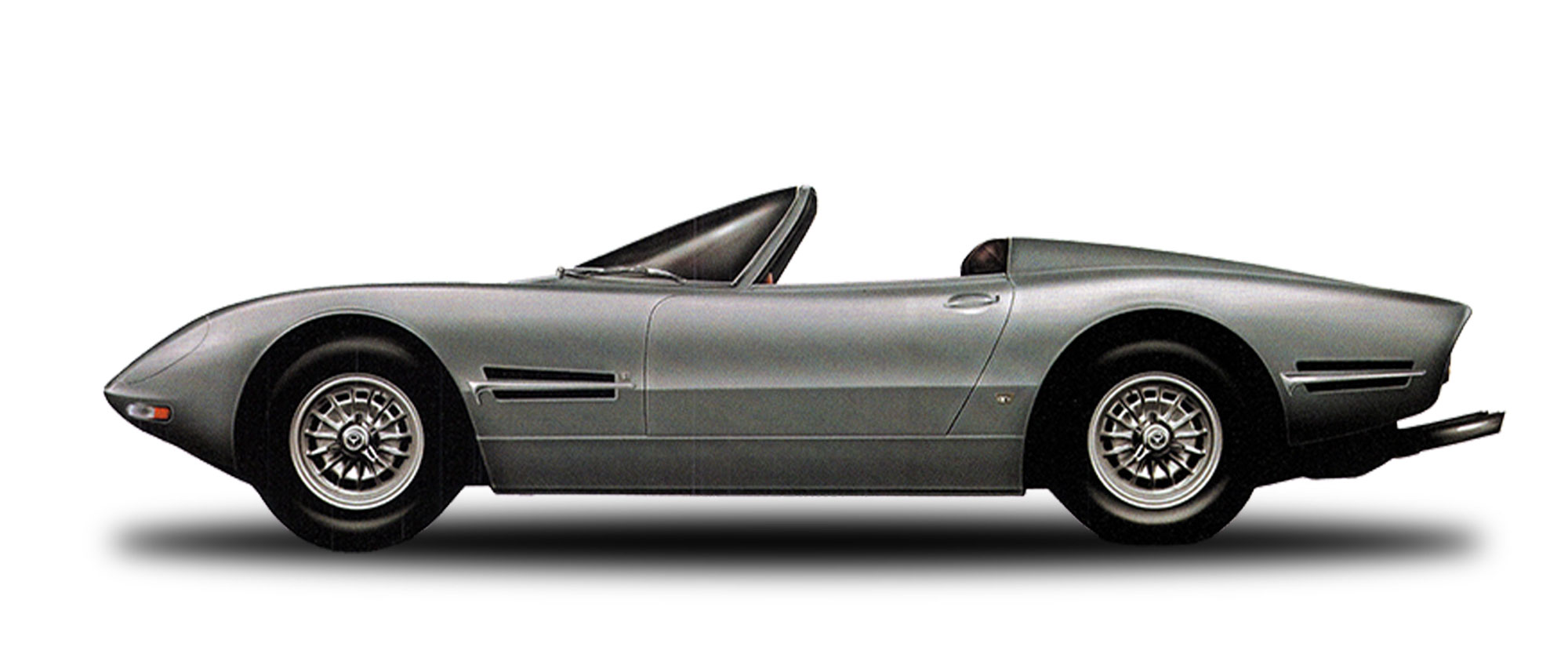
For Bizzarrini 1966 was a year for open cars with the P538 and 3 examples of the 5300 GT Spyder being built.
A sumptuous silver fully open prototype with faired in headlights was followed by two further examples both with a Targa style central spine.
1967
1900 GT Europa
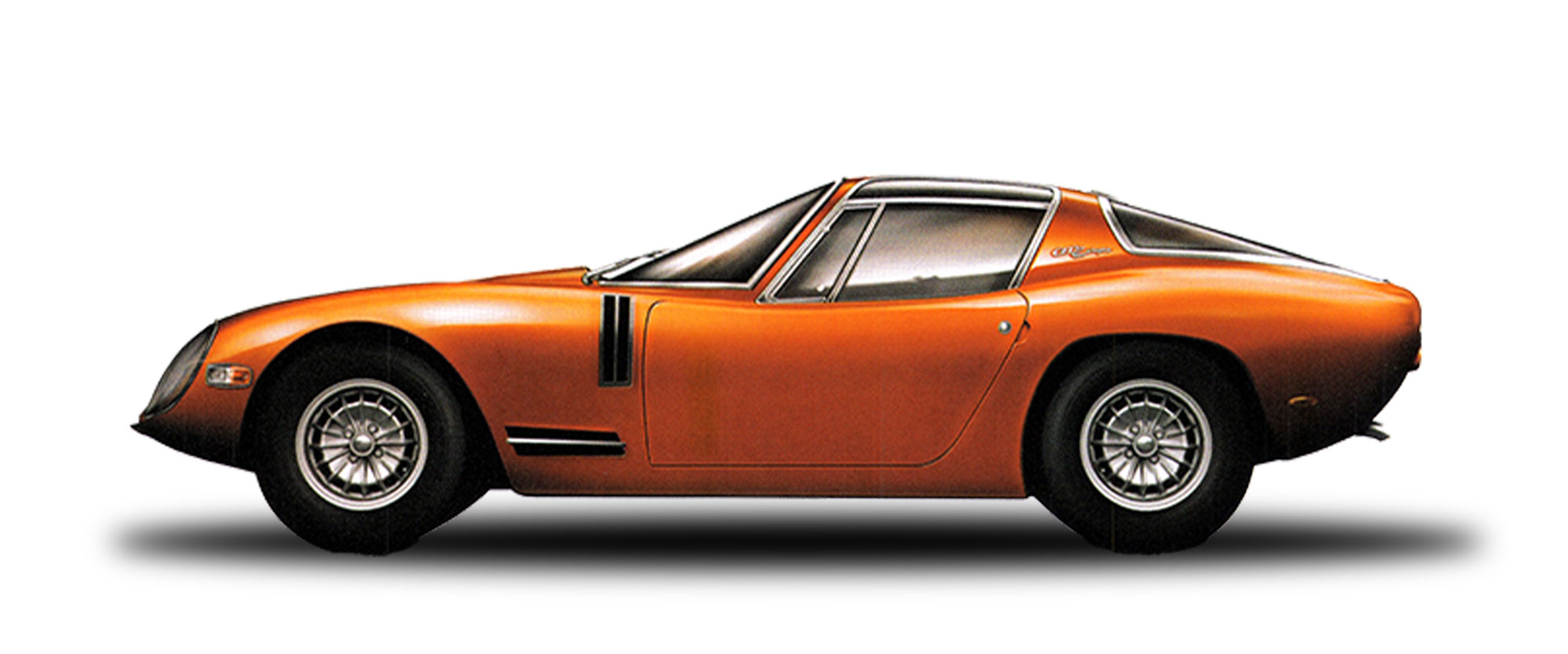
1967 saw Bizzarrini create an entry level sports tourer in the 1900 GT Europa.
Using a modest 2 litre Opel engine and a light fibreglass body the Europa was clearly a sibling to the mighty 5300 GT utilising the same signature front face and faired-in headlights.Less than 20 1900 GT Europa are believed to have been manufactured.
1968
5300 GT America 2+2
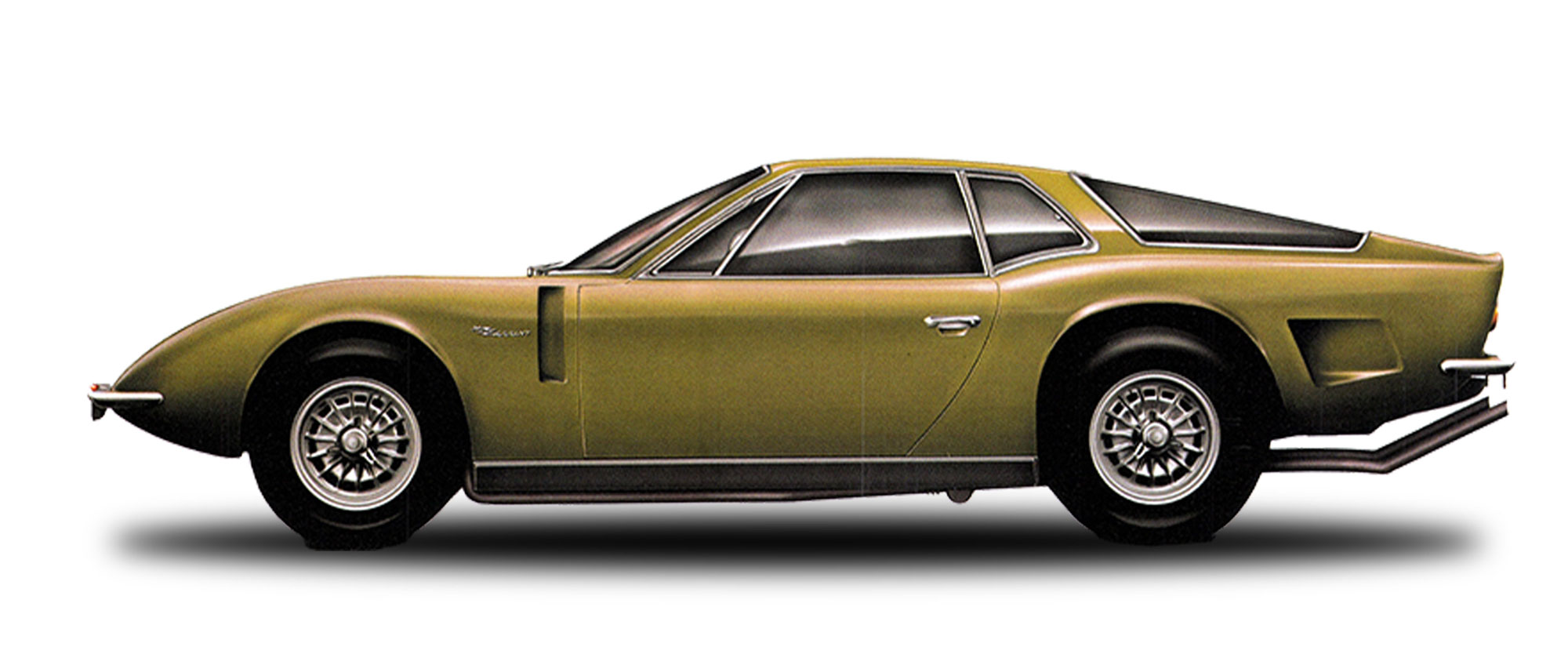
Three one offs were created in 1968.A unique 2+2 version of the 5300 GT America was revealed at the Salone di Torino in November of that year.
With bodywork modified to provide two rear seats this was a grand tourer for the American market created without compromising the experience of the iconic 5300 GT.
1968
Manta
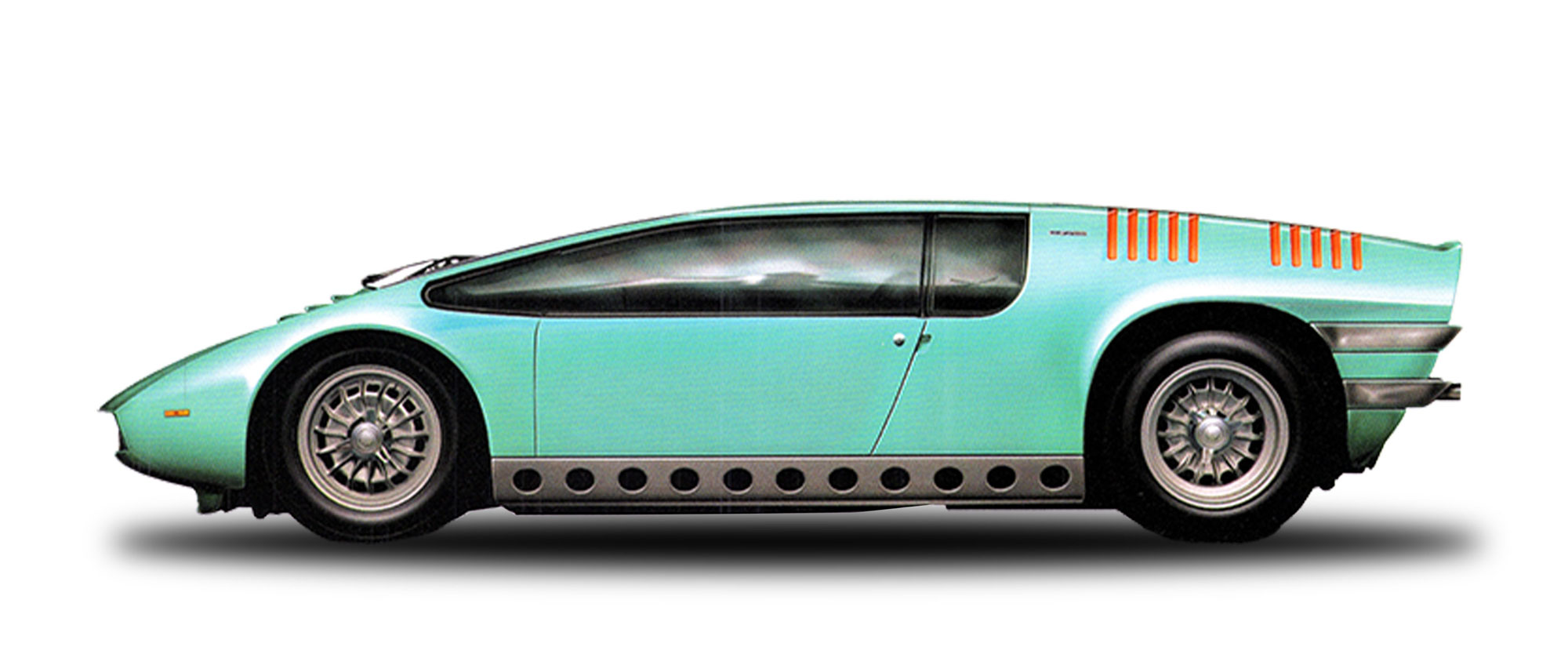
Illustrating the strength of the relationship between Giugiaro and Bizzarrini, when Giorgetto Giugiaro fist set up his own design house, Ital Design, in 1968 he wanted to take the automotive world by storm. To showcase his vision and talents, Giugiaro created the Bizzarrini Manta for the Turin Motor show.
The Manta eschewed flowing curves for a more geometric futuristic approach. With a central driving position, flanked by two passengers the Manta concept was truly innovative and instantly unforgettable.
1968
538 Duca D’Aosta
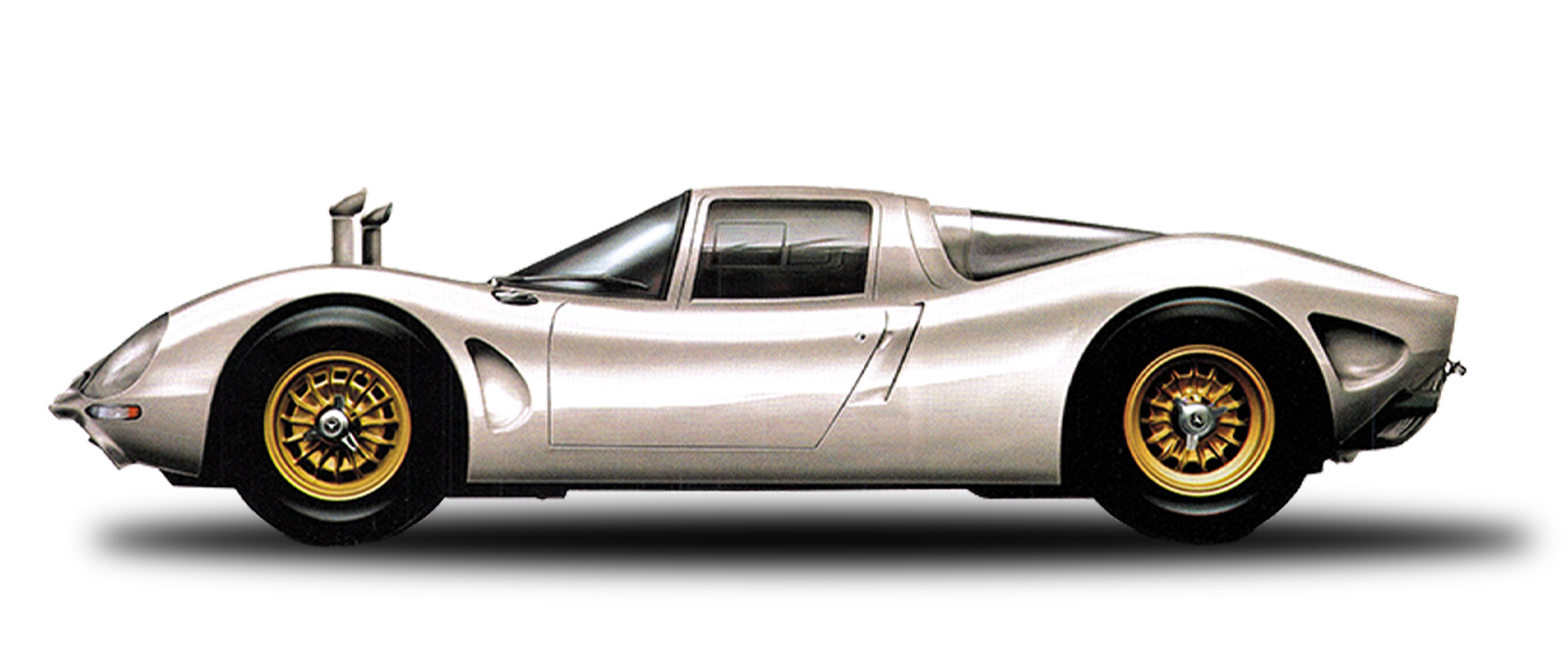
The only closed P538 was created and named after the owner who commissioned the design, the Duca D’Aosta.
Prince Amedeo, a member of the Italian Royal Family, wished to have a formidable race car that could be used daily on the road. Giotto duly obliged and created one of the most seldom seen Bizzarrini models.
2005
Ghepardo GTS
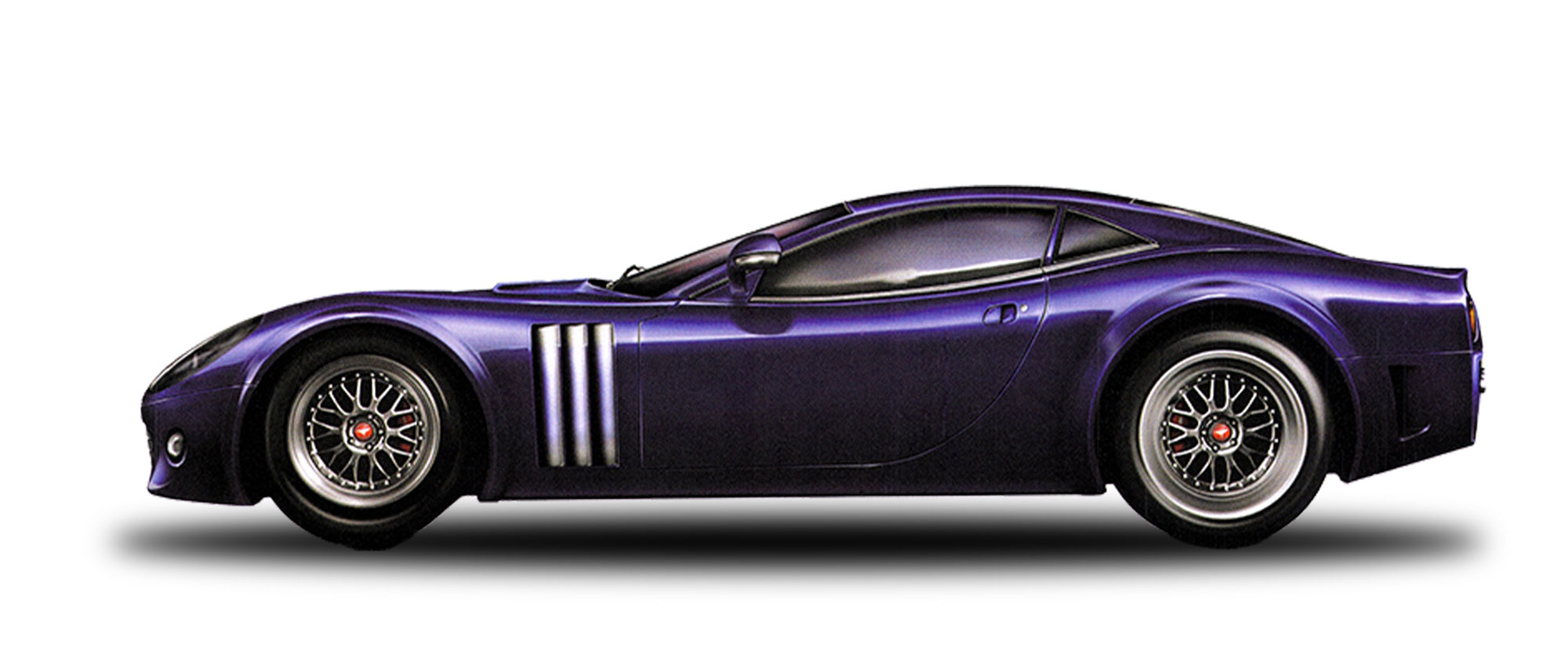
Giotto Bizzarrini is often quoted as claiming ‘I am just a worker’. His passion and focus upon engineering and building cars had meant less rigor on the financial aspects of business. In 1969 after challenges with his business partners and investors Giotto was forced to declare Bizzarrini SpA bankrupt.
Subsequently the Bizzarrini brand and its intellectual property has changed ownership a number of times. Several owners have sought to resurrect the brand with interesting prototypes being created through to the early 2000s.
2022
5300GT Corsa Revival
In 2020 a new Bizzarrini company was formed after a transfer of ownership and embarked upon the strategy to return the brand to its prominence in the automotive world.
As a subsidiary of Pegasus Brands, Bizzarrini is supported by Alroumi Group Holdings and Group CEO Rezam M Alroumi, who was the chief architect behind the group of local and international investors who purchased a majority stake in Aston Martin Lagonda in 2007. Under his watch the brand was completely repositioned, which resulted in its most successful period ever.